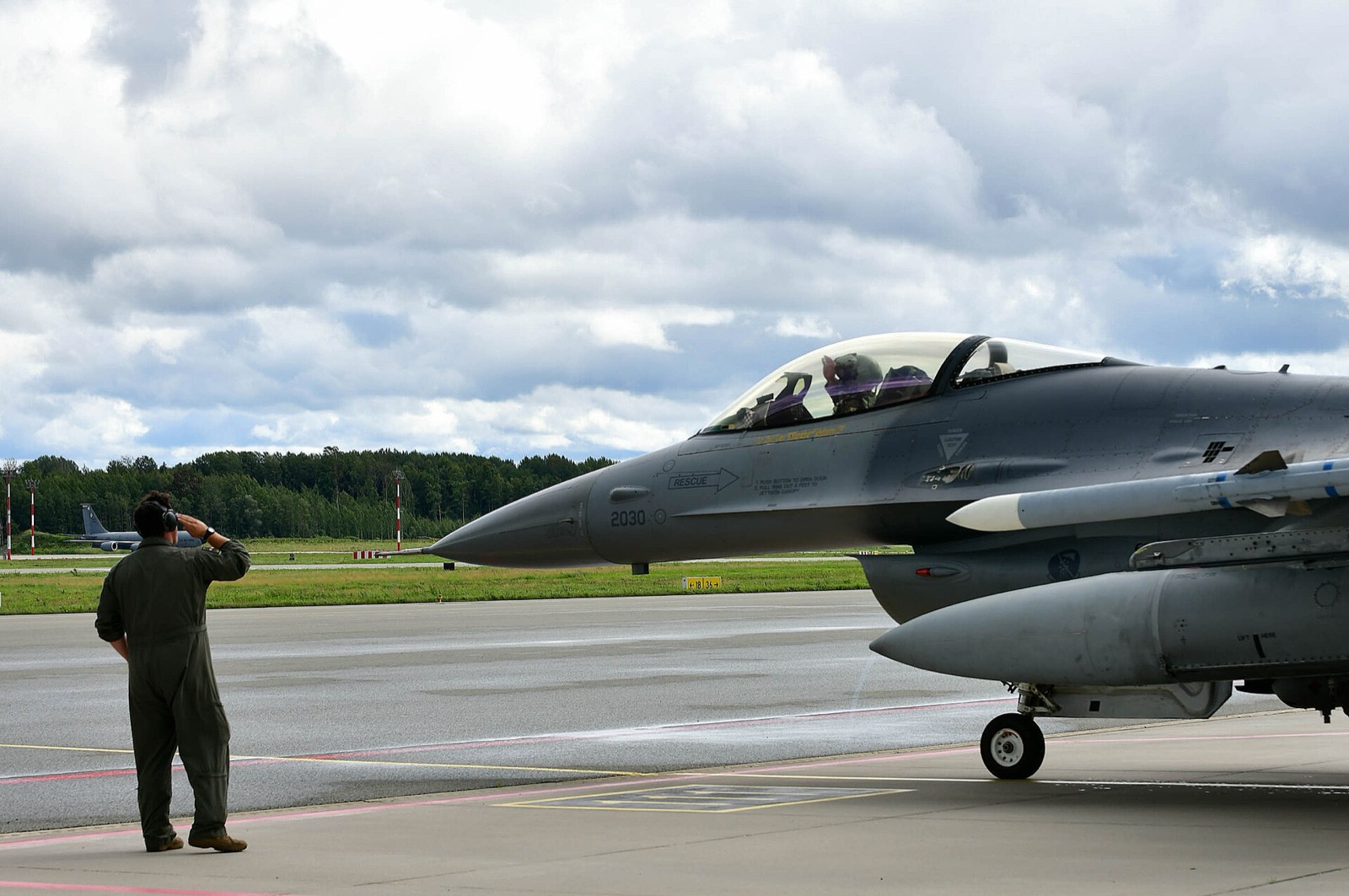
Latvia declared an airspace threat in the municipalities of Balvi and Ludza shortly after midnight on 3 November, activating NATO air-policing fighters and sending warnings to residents. The alert began at 00:07 and was lifted at 00:33 local time. Its cancellation ended the immediate warning, but did not settle what had entered the airspace.
Initial military information suggested that an object had fallen in Balvi municipality. A ground search was being organised to establish its location and clarify the circumstances. The object’s origin and exact type were not established in the published account. The confirmed response should therefore not be presented as proof of a Russian attack or of a NATO shoot-down.
The warning was issued through Latvia’s cell-broadcast system. An orange alert signals an identified airspace threat and requires action by people in the affected area; a yellow alert is informational. This distinction matters because an alert tells residents how to respond to an immediate risk, rather than providing a complete explanation of the incident.
The armed forces said they monitor the airspace with NATO allies and have reinforced air defence along the eastern border with additional units. They warned that foreign unmanned aircraft could again approach or enter Latvian airspace while Russia’s war against Ukraine continues. That wider security context does not establish the responsibility for this particular object.
The next factual milestone is the result of the search: whether wreckage is found and what an examination can establish about the flight. Until then, the clearest facts are the warning, the activation of fighters and the preliminary report of an object coming down. Residents encountering a suspicious object or debris have been told not to approach or touch it and to alert the emergency services.