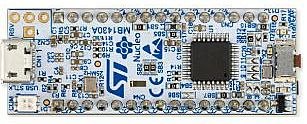
STMicroelectronics presented a unified STM32 microcontroller platform on 4 November, bringing a common technology foundation to industrial equipment, automotive systems and robotics. The announcement includes the STM32A family for applications with higher functional-safety requirements.
The aim is to let developers reuse architectures, software and tools across product categories. This is a platform strategy, not a claim that every car and robot will use an identical chip. Different applications retain different performance, safety and connectivity requirements.
The work behind the chip
The shared foundation combines Arm Cortex-M cores with the STM32Cube software ecosystem and common manufacturing technologies. The STM32A roadmap includes lines aimed at local control nodes, body and comfort functions, and more demanding multi-domain control.
For an engineering team, continuity can matter as much as a processor's headline speed. Existing code, debugging knowledge and development tools represent investments. Reusing them could reduce duplicated work when a project moves from one device category to another. Whether that produces savings depends on the actual design and the adaptations it needs.
Common tools, different responsibilities
A control system in a machine or vehicle must still meet the requirements of its particular application. A familiar software environment does not by itself certify the finished product or eliminate the need to validate timing, fault handling and safety behaviour.
ST is positioning the platform around the convergence of sensing, control, connectivity and AI in physical systems. The practical test will be how effectively customers can build across those domains without losing the special requirements of each. The announcement establishes the company's direction and product roadmap; it should not be read as evidence that every planned device is already deployed in production.