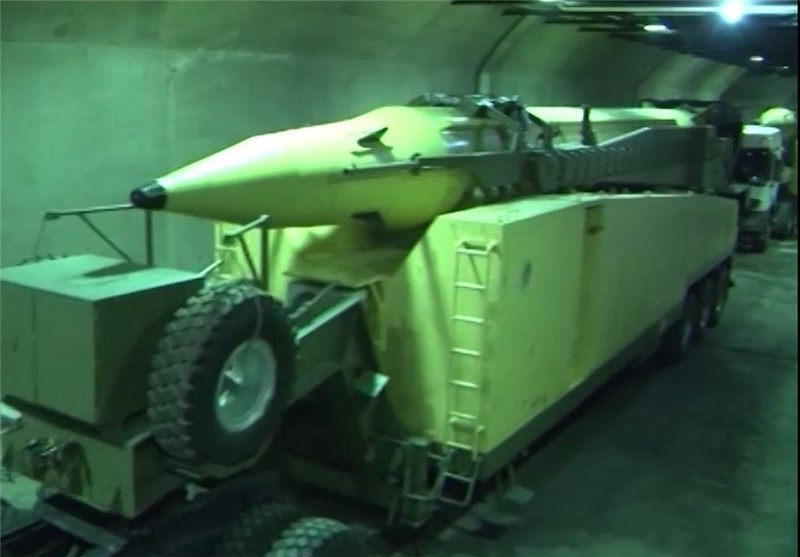
Iran’s Revolutionary Guard said on 7 November that its self-imposed 2,000-kilometre limit on ballistic-missile range had been lifted. Spokesman Hossein Mohebbi announced the change in Tehran without identifying a newly operational weapon that exceeds that distance.
The announcement changes the declared policy. It does not, by itself, establish a new technical capability. Developing a missile, testing it successfully and deploying it in usable numbers are separate stages; removing a political ceiling cannot substitute for evidence of those steps.
An arsenal with different ranges
Iran’s missile force includes several families with different propulsion systems and intended roles. The Wisconsin Project’s Iran Watch inventory lists Shahab-3 at about 1,300 kilometres, Ghadr at 1,600 kilometres and Sejjil at 2,000 kilometres. These are public estimates, rather than measurements of every weapon currently available.
The same inventory lists higher estimated ranges for some Khorramshahr variants but describes their deployment as uncertain. That distinction helps explain why a declared ceiling, a technical estimate and a confirmed operational capability should not be treated as interchangeable. There is no single range that describes the whole arsenal.
What the signal means
The immediate significance is the willingness to signal fewer self-imposed restraints. Any longer-term military consequence will depend on the weapons actually produced, their reliability, payload and deployment. A higher maximum distance on paper does not establish the accuracy or effectiveness of a system.
For governments assessing the announcement, the next substantive evidence would be identifiable testing or deployment information. The statement alone does not establish an imminent attack on a particular country, nor does it demonstrate that Iran has fielded an intercontinental ballistic missile.