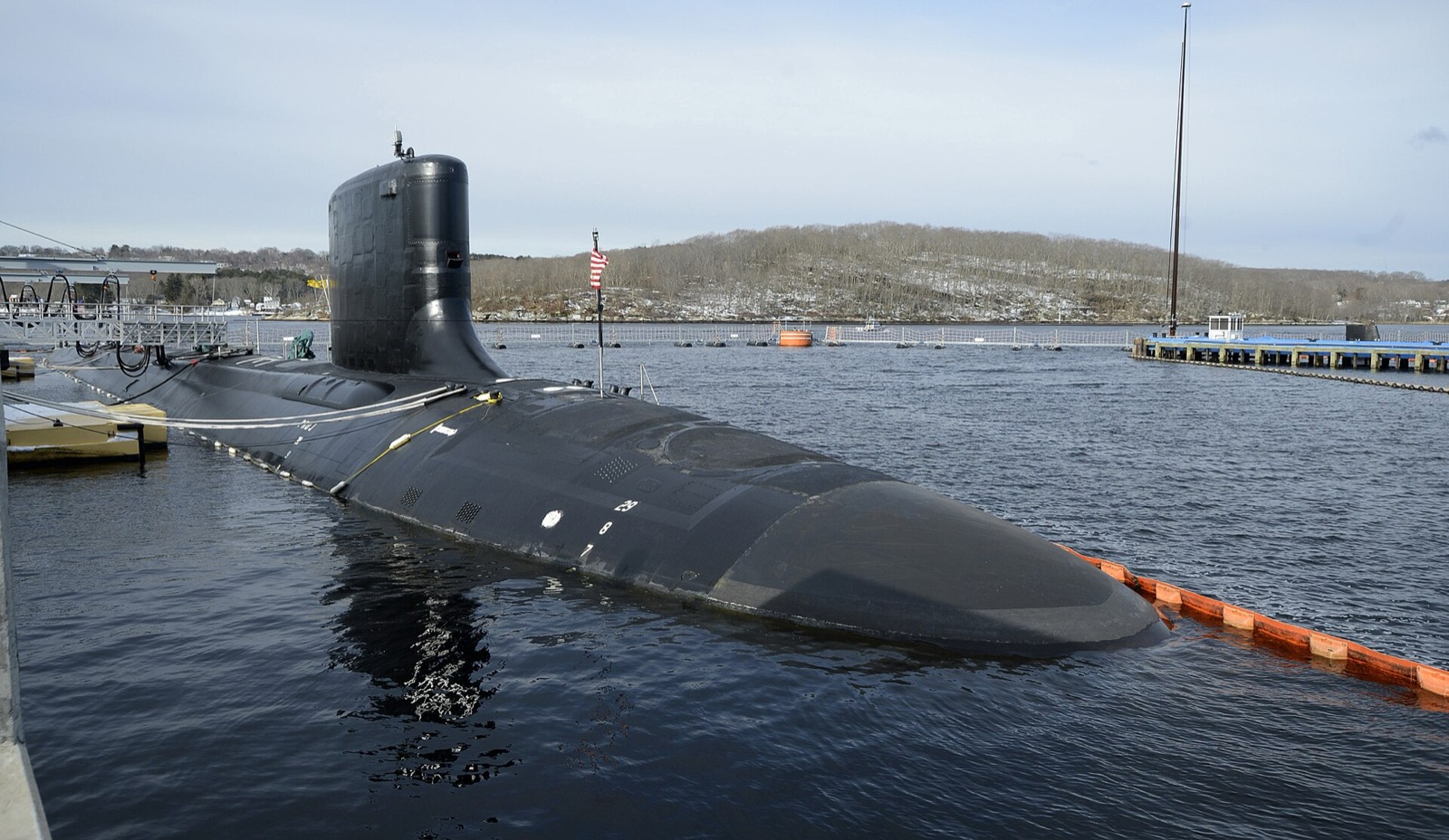
USS Colorado has been selected as the first US submarine assigned to Submarine Rotational Force–West in Australia from late 2027. The designation was announced jointly by Australia, the United States and the United Kingdom on 27 October, giving the AUKUS programme a named vessel and a clearer operational milestone.
The Virginia-class attack submarine will be part of a rotational presence at HMAS Stirling in Western Australia. The wider plan envisages up to four American submarines and one British submarine rotating through the base. That is the projected scale of the force, not a claim that all five are already present.
The arrangement is intended to help Australia develop the skills, maintenance capacity and regulatory experience needed for its future submarine capability. It also gives the partner navies additional options for sustaining deployments in the region. A US submarine rotating through an Australian base is distinct from Australia taking ownership of its own boats.
Nuclear-powered and nuclear-armed are different descriptions. The joint statement places the programme in the context of a conventionally armed, nuclear-powered Australian capability and the partners’ non-proliferation obligations. It does not announce the deployment of nuclear weapons.
The next practical tests are preparation of the base, the workforce and the maintenance system before the planned rotation. Naming USS Colorado makes the timetable more concrete, while the deployment itself remains a future event. Its significance lies in the move from a strategic agreement towards the infrastructure and day-to-day arrangements needed to operate it.