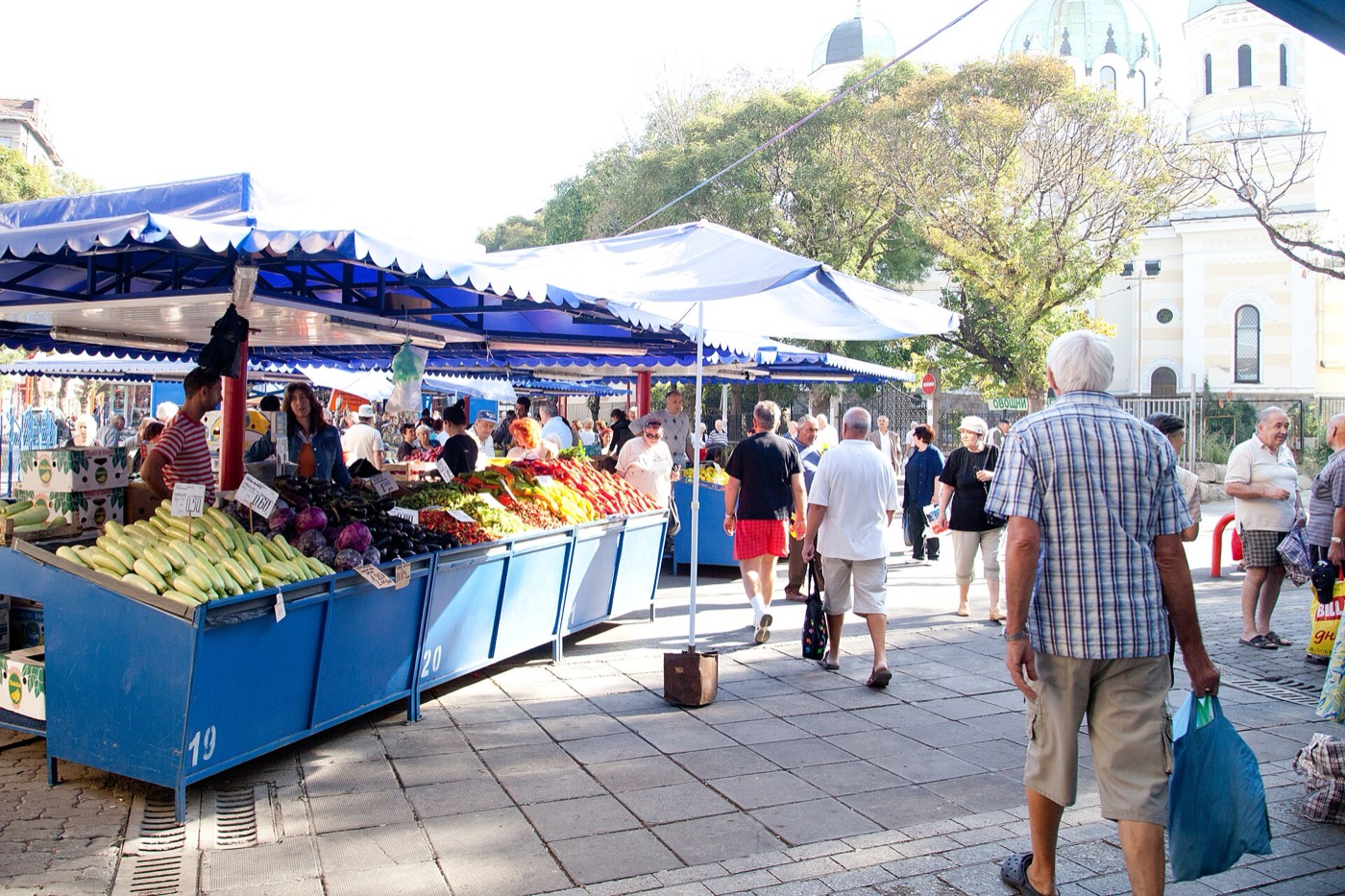
Most vegetables became more expensive on Bulgaria’s wholesale markets this week, while several staple foods fell in price. The wholesale price index rose 0.21% to 2.360 points from 2.355 a week earlier, showing a modest overall increase despite sizeable changes in individual products.
The sharpest vegetable moves
Courgettes recorded the largest increase among the listed vegetables, up 18.36% to €1.07 per kilogram. Tomatoes rose 10.24% to €0.59 and red peppers 7.26% to €1.33. Potatoes, carrots, cabbage and cucumbers also rose, while green peppers and lettuce became cheaper.
A different direction for staples
Sugar fell 3.43% to €0.90 per kilogram, flour type 500 dropped 2.82% to €0.62, and sunflower oil declined 2.05% to €1.72 per litre. Cow’s-milk cheese and Vitosha-type yellow cheese also fell. Eggs moved in the opposite direction, rising 3.09% to €0.20 each.
Wholesale is not the checkout price
These are market-level averages, not a promise that every shop will display the same prices. Retail prices also reflect distribution, storage, losses, contracts and margins. A weekly fall in one commodity can therefore take time to appear on a supermarket shelf or be offset by other costs.
What the basket tells us
The useful conclusion is that food prices are moving unevenly. A small change in the aggregate index can conceal larger increases in seasonal produce alongside cheaper staples. Comparing the same product, unit and market level gives a clearer picture than treating every food item as moving together.