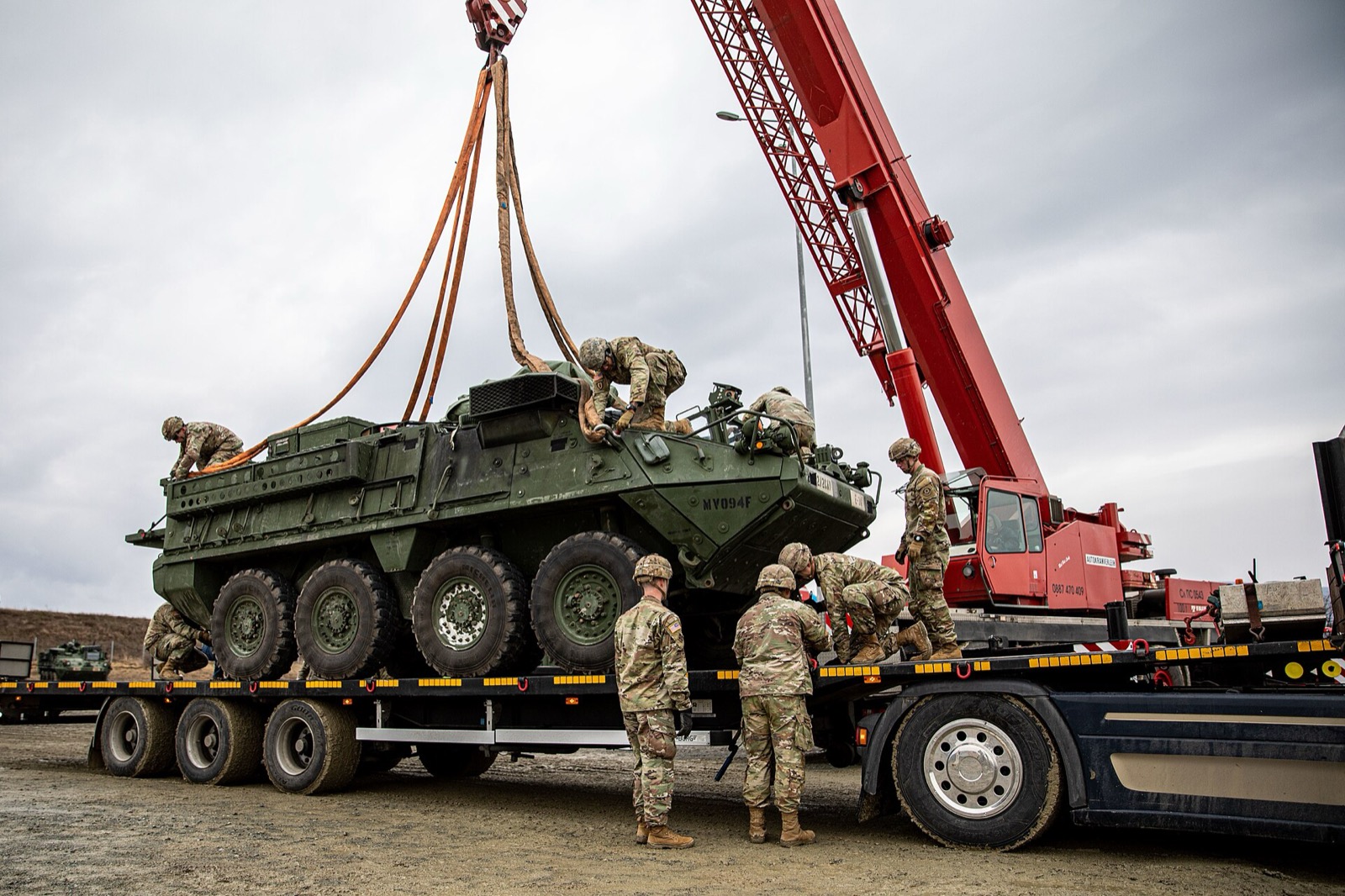
Bulgaria is scheduled to formally accept its first five Stryker armoured vehicles on Tuesday, 3 November, at the TEREM–Ivaylo military plant in Veliko Tarnovo. The ceremony is an initial delivery milestone in the modernisation of the land forces, rather than completion of the entire procurement programme.
Defence Minister Dimitar Stoyanov and Chief of Defence Admiral Emil Eftimov are expected to attend. Assembly and equipment integration take place at the Bulgarian plant, giving the delivery a domestic industrial component as well as a military one. At the morning check, the ceremony was still described as forthcoming.
The contract covers 183 vehicles. Its original value of about $1.37 billion was increased by roughly $40 million after parliament approved an adjustment during the summer, bringing the total to around $1.41 billion. The first five machines are therefore the beginning of a much larger delivery schedule, not the full order.
The programme also depends on the ability to maintain the fleet after it arrives. TEREM–Ivaylo has been identified as a potential regional service centre for the platform. Local infrastructure and technical expertise would matter over the vehicles’ operating life, when repair capacity and access to support become as important as the initial handover.
For the army, the wider task is to turn the new equipment into a usable capability through the remaining deliveries, training and sustained maintenance. The acceptance ceremony can mark progress on that route without establishing that every unit is already equipped or operationally ready. Confirmation of the completed handover and further delivery milestones will be the next developments to follow.