A new trial across at least 200 GP practices in England will assess whether blood tests can help identify several cancers earlier. More than 20,000 NHS patients are expected to take part in the programme announced on 4 November.
The STRIDE-RCT trial targets patients aged 45 and over who visit their GP with abdominal symptoms such as persistent bloating or discomfort. It is not an announcement that a proven test is now being offered as routine population screening.
A tool for deciding who needs more tests
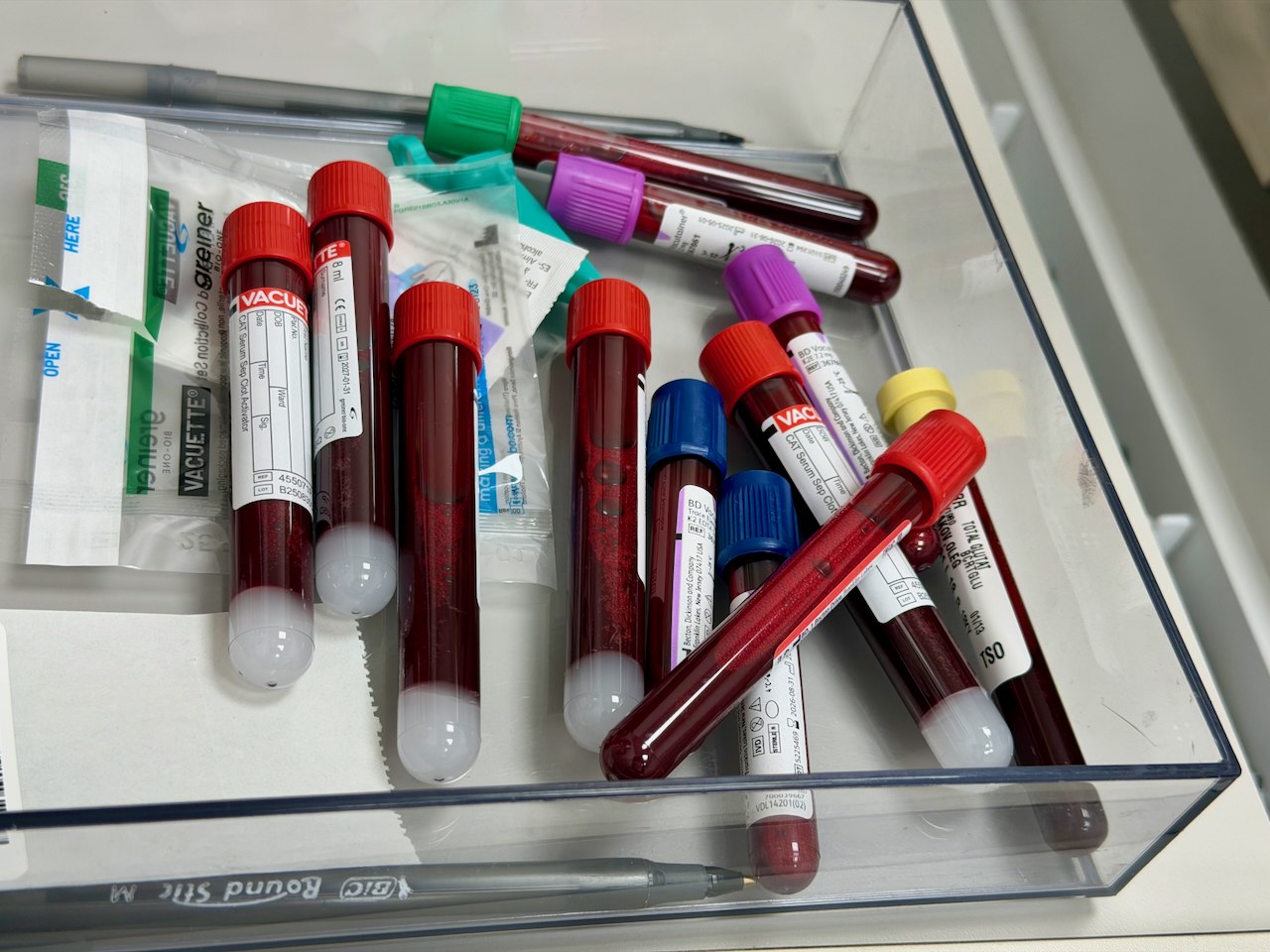
The tests look for signals associated with several cancers and may indicate where in the body they originate. Most involve one or two tubes of blood taken alongside routine testing. Technologies include protein measurements and artificial intelligence.
A positive result is not a confirmed cancer diagnosis. The trial will examine how the information works alongside a GP’s clinical judgement when deciding whether further investigation or an urgent referral is needed.
Evidence before a wider rollout
The programme covers a range of abdominal cancers, including bowel, pancreatic, ovarian, stomach and liver cancer. It will receive up to £8.49 million in government funding through the National Institute for Health and Care Research.
The central question is whether the tests improve decisions in everyday practice, rather than simply detect a laboratory signal. The findings will help determine whether wider use is justified. Patients with persistent symptoms should not wait for a trial result before seeking medical assessment.