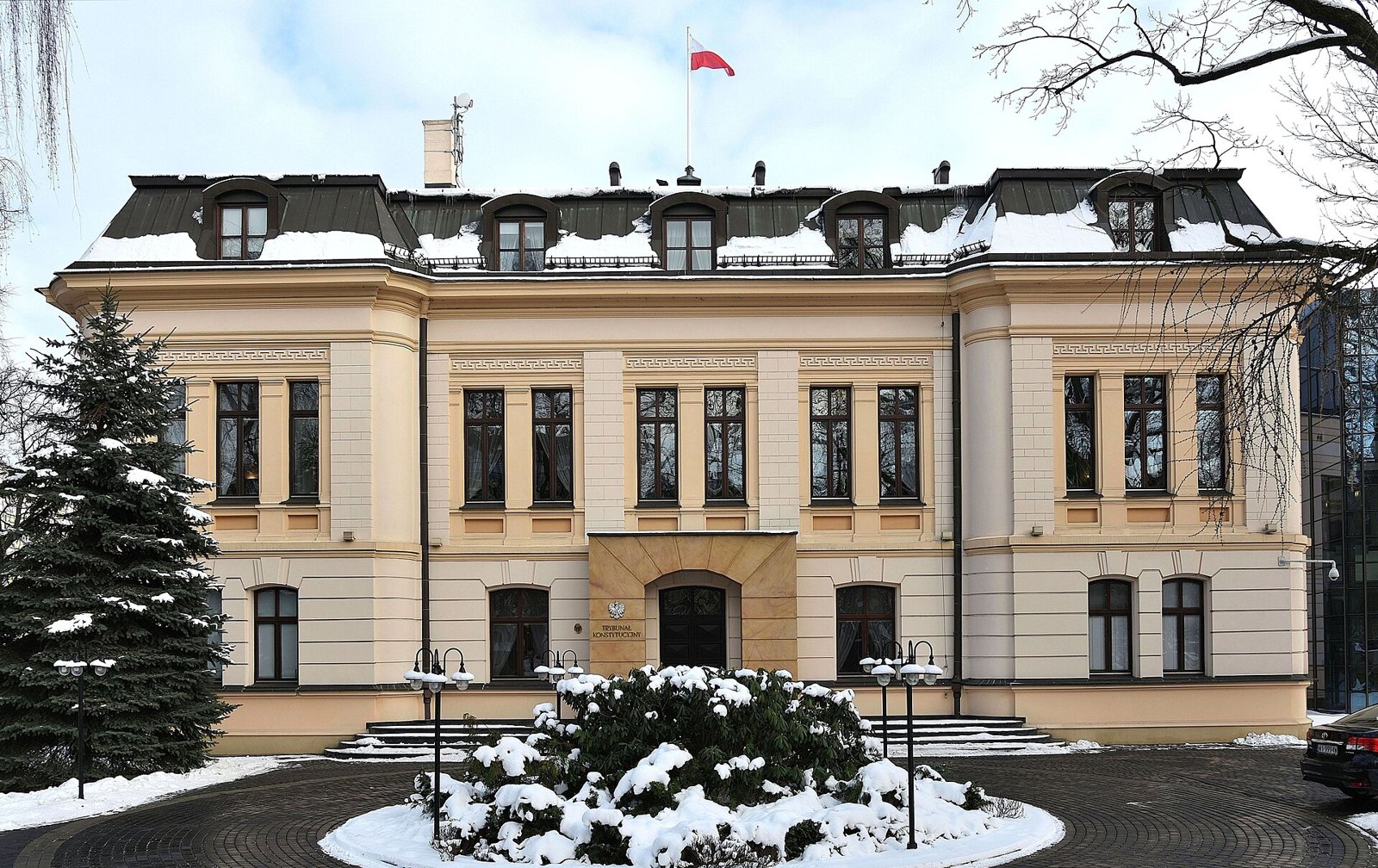
Polish President Karol Nawrocki cut short a visit to Senegal as a dispute over the leadership of the Constitutional Tribunal escalated. The temporary suspension of its president, Bogdan Święczkowski, and his deputy brought protesters to the court and sharpened the confrontation with Prime Minister Donald Tusk.
Nawrocki accused the government of forcibly taking control of a constitutional institution. Tusk defended the authorities’ actions as part of restoring the rule of law. These are the opposing political positions in the dispute, rather than a settled legal finding that a coup has taken place.
The tribunal announced late on Friday that Anna Korwin-Piotrowska, had suspended Święczkowski and taken over the leadership. Justice Minister and Prosecutor General Waldemar Żurek said requests to lift immunity had been submitted in connection with suspected offences.
The suspensions and the allegations are separate from any final determination of criminal responsibility. Requests to remove immunity open a procedural question; they do not establish guilt. The competing accounts of the legality of the leadership change are central to the present crisis.
The dispute also has a clear political background. Święczkowski was appointed during the previous Law and Justice administration, with which Nawrocki is politically aligned. Control of the tribunal matters because its decisions concern whether legislation complies with the constitution.
Police were deployed around the building as protests unfolded. The immediate question is who can lawfully exercise the tribunal’s powers while the leadership dispute is contested. A durable resolution will depend on legal decisions and institutional compliance, rather than the competing declarations alone.