Evidence before adoption
WHO has issued guidance on generating evidence for new tuberculosis diagnostics. Announced on October 21, it addresses how studies should support future recommendations. It is not the announcement of a single newly approved test. [1]
Beyond accuracy
The guidance asks researchers and developers to look beyond whether a test detects disease. It includes study design, participant selection and reporting, alongside health outcomes, costs, equity, acceptability and feasibility. WHO says incomplete evidence has made past diagnostic studies difficult to assess and combine. [1]
A map of the patient pathway
The document sets out 28 key messages and a framework connecting a diagnostic’s intended role with the studies needed to evaluate it. The publication page is dated October 20, a day before the news announcement. It covers tests, sample types and testing strategies rather than endorsing every product in those categories. [2]
Context: a laboratory result is one step
A diagnostic must fit into a chain of decisions. Who can reach the service, how a sample is obtained and whether the result leads to an appropriate next step all affect its usefulness. An accurate measurement can still leave a gap in care if the surrounding pathway does not work. This explains why evidence on implementation belongs beside evidence on accuracy.
What the new guidance changes
For someone planning a study, the practical value is to define the intended decision before choosing the measurements. A trial designed around the wrong population or outcome may answer a narrow technical question without informing a real clinical choice. The guidance offers a research framework; it does not substitute for evaluation of a specific device. [2]
For patients and readers
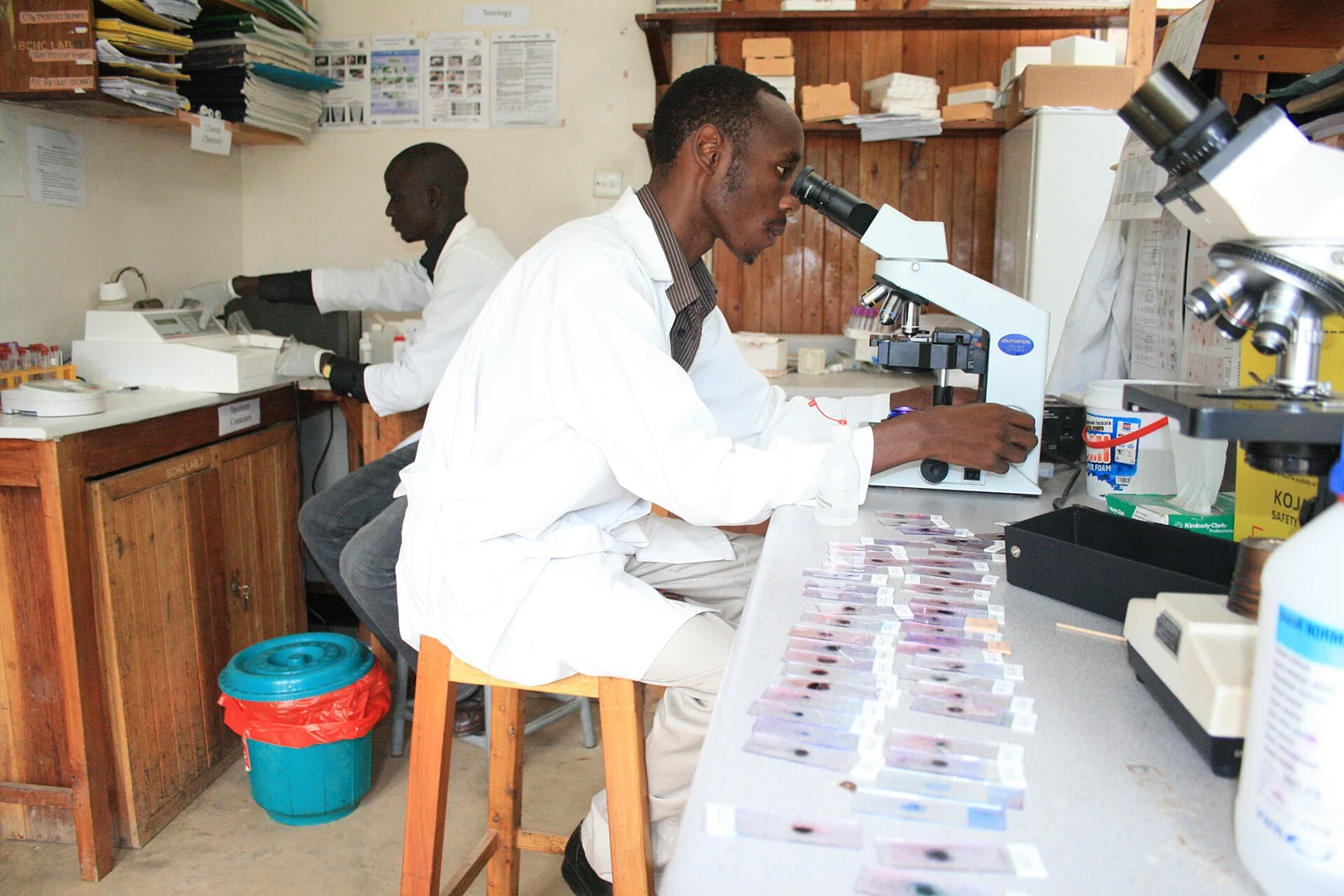
The announcement is not advice to replace an existing test or change treatment. Individual decisions belong with qualified clinicians and the applicable local services. The archive laboratory photograph illustrates diagnostic work and does not show a new WHO-approved device or the studies behind this guidance.