From a commitment to national action
WHO’s 19 October notice describes a Dakar meeting of more than 75 experts on the transition away from mercury-containing dental amalgam. It links the work to a 2034 phase-out decision under the Minamata Convention and discussions on regulation, alternatives, workforce training and waste management. [1]
A system change, not a treatment instruction
The notice concerns health-system planning and a project review held from 19 to 22 October. It does not establish a new individual treatment decision or tell patients to remove existing fillings. The meeting’s scheduled end also does not, by itself, prove that a final outcome document was adopted. [1]
Context: an alternative must work in practice
Changing a material in health care raises questions beyond whether an alternative exists. A system has to consider how staff learn to use it, how supplies reach clinics and how waste is handled. These are implementation questions, not a clinical comparison of products or a recommendation about a particular person’s mouth.
What would demonstrate progress
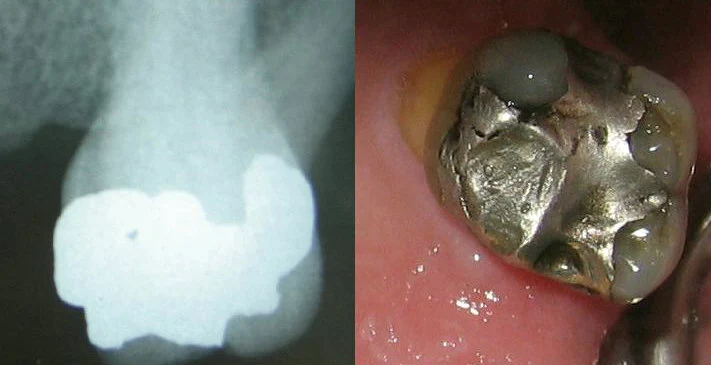
Published national plans and evidence of implementation would allow assessment beyond the meeting announcement. Access and service continuity need to be considered alongside the environmental objective. Readers with individual treatment questions should discuss their circumstances with a dental professional. The photograph shows a clinical and radiographic example of an amalgam restoration from 2007; it does not identify a participant in the current project.