Cyclone Arnab crossed India’s Andhra Pradesh coast on 28 October, bringing destructive winds and heavy rain after mass evacuations from vulnerable coastal communities. More than 180,000 people had been moved in Andhra Pradesh and neighbouring Odisha ahead of its arrival, according to reports citing the authorities.
The storm’s prolonged approach left parts of the coast exposed to severe weather for hours. The India Meteorological Department subsequently confirmed that the centre had moved over land. Arnab weakened from a very severe to a severe cyclonic storm during the morning, but heavy rain and strong winds continued.
The landfall brought sustained winds of about 125–135 kilometres per hour, with stronger gusts. Kakinada, Konaseema and East Godavari were among the districts facing dangerous conditions. Trees were uprooted, roads were disrupted and power supplies were affected.
Evacuation figures varied between updates and states as the operation developed. Officials in Odisha separately reported moving more than 30,000 people from low-lying and landslide-prone areas, while shelters and emergency teams were mobilised along the expected path.
Some schools closed and rail and air services were cancelled or disrupted. The weakening of the cyclone does not mean that the emergency has ended: rainfall further inland can threaten communities away from the point where the storm first crossed the coast.
The immediate task is to assess damage, restore access and support people in shelters while tracking the storm into southern Odisha. Early reports on casualties changed during the day, so this report does not treat the first accounts of no deaths as a final outcome.
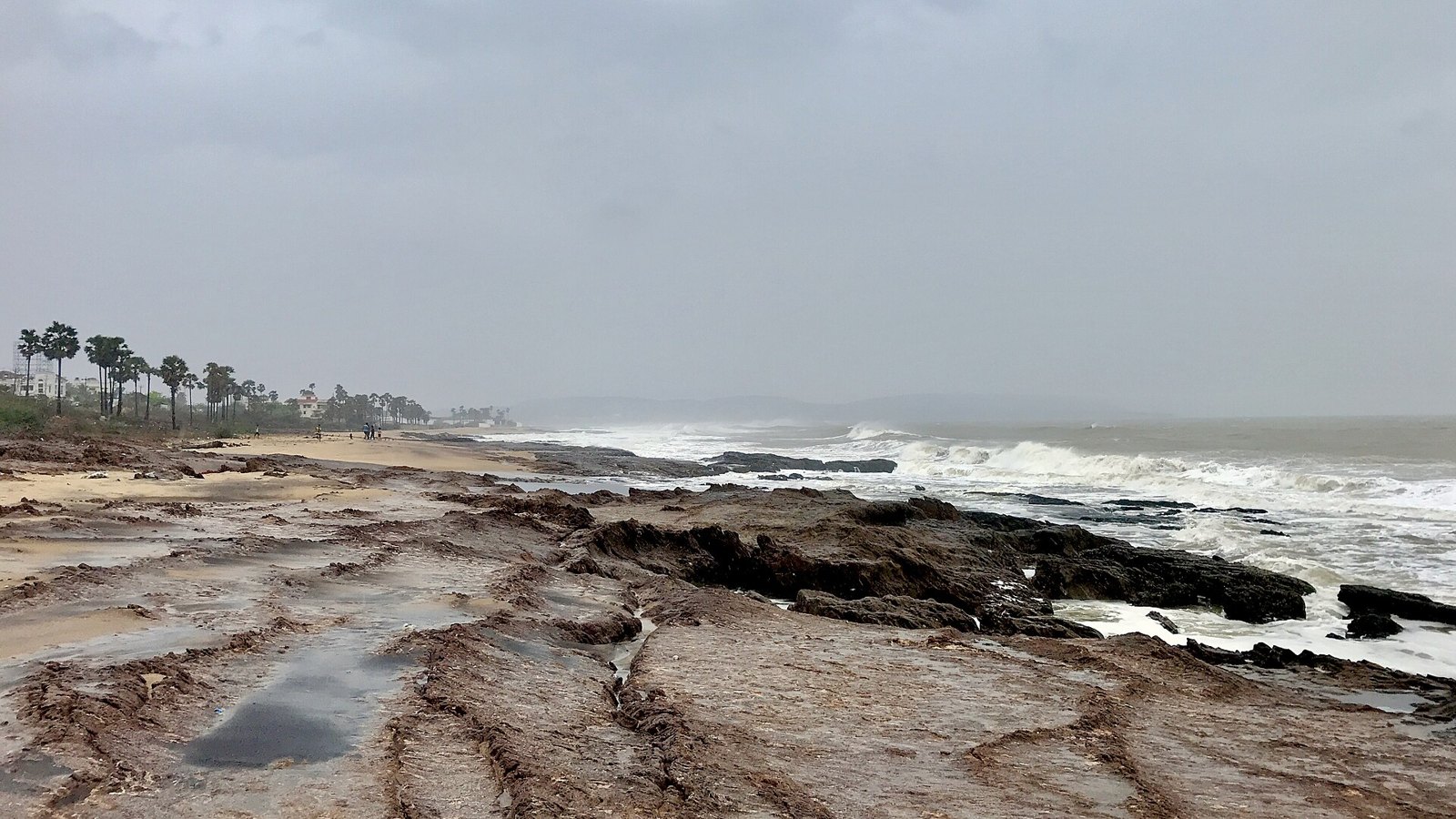
The photograph shows rough seas near Visakhapatnam during Cyclone Fani in May 2019. It is an archive illustration of the exposed coastline, not evidence of Arnab’s damage or conditions at a particular location today.