A wider outbreak, a harder response
The World Food Programme says Ebola has spread to an eighth province in the DRC, adding pressure in communities already affected by conflict and hunger. Its 23 October update describes food distributions, transport services and the construction of treatment centres as parts of the response. Four further centres are envisaged, not yet operational. [1]
Why food belongs in an epidemic response
A family asked to follow isolation guidance still needs to eat. When supplies fail, searching for food can compete with the ability to remain in care or isolation. WFP’s update describes assistance intended to reduce that pressure. Food delivery does not replace medical treatment; it helps make public-health measures possible in households with little financial or practical room to absorb disruption. [1]
Two funding figures need different labels
At the Geneva briefing, WFP distinguished $115 million for the Ebola response over six months from $214 million for its broader needs in eastern DRC, covering both the outbreak and conflict-related assistance. Those are not two interchangeable estimates of the same programme. WHO also said it was not recommending travel or trade restrictions with affected countries. The briefing’s figures are dated observations and should not be treated as a live case counter. [2]
What to watch next
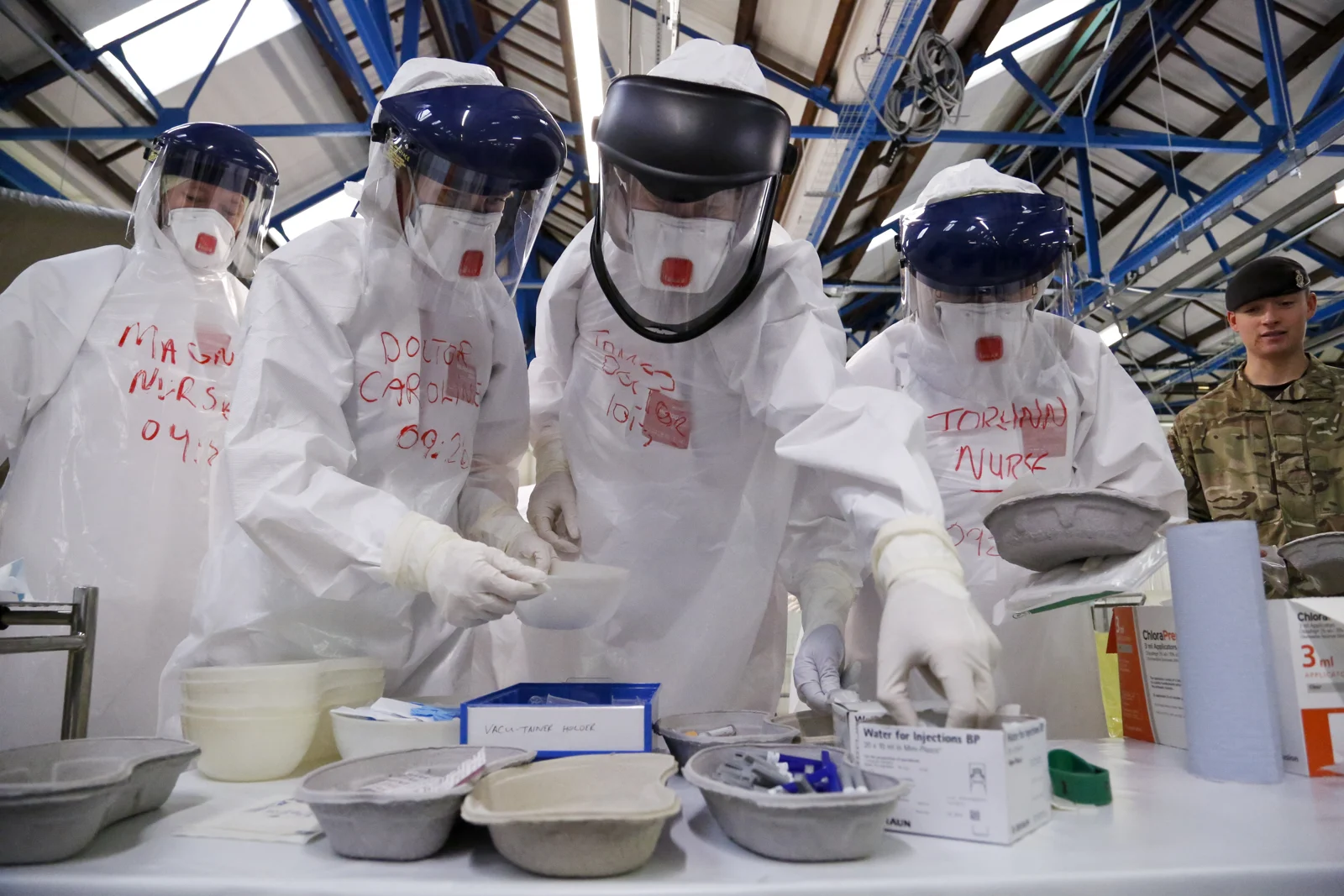
The operational questions are whether new areas can receive staff and supplies, whether treatment facilities actually open, and whether support continues long enough for households to follow guidance. Announcing a centre and having one ready for patients are separate milestones. The archive photograph shows NHS medics training in Ebola protective equipment near York in 2014; it does not depict the DRC or the current outbreak. This is a report on the humanitarian response, not personal medical advice or an assessment of any individual traveller’s risk.